Are Powdered Eggs Healthy? Nutrition, Protein and What to Look For
Published · Updated
What's really in powdered eggs, how they compare to fresh, and how to pick a healthy one.
Yes. Powdered eggs made from just eggs are about as healthy as fresh eggs. Drying removes the water, not the nutrition, so you still get high-quality protein, vitamins and minerals in every serving.
The catch is that not all egg powders are the same. How the eggs are dried, and what else goes into the bag, makes a real difference. Here's what's in powdered eggs, how they compare to fresh, and what to look for when you buy them.
Powdered vs fresh eggs
Fresh eggs
- Protein per egg
- about 6 g
- Shelf life
- a few weeks, refrigerated
- Prep
- crack and separate
- Waste
- shells, spoilage
Freeze-dried egg powder
- Protein per egg
- 6 g
- Shelf life
- up to 25 years sealed, no fridge
- Prep
- mix 2 tbsp powder + 2 tbsp water
- Waste
- use only what you need
What's in powdered eggs?
Whole egg powder is simply whole eggs with the water taken out. Once you mix it with water, you get roughly the same nutrition as the fresh eggs it was made from.
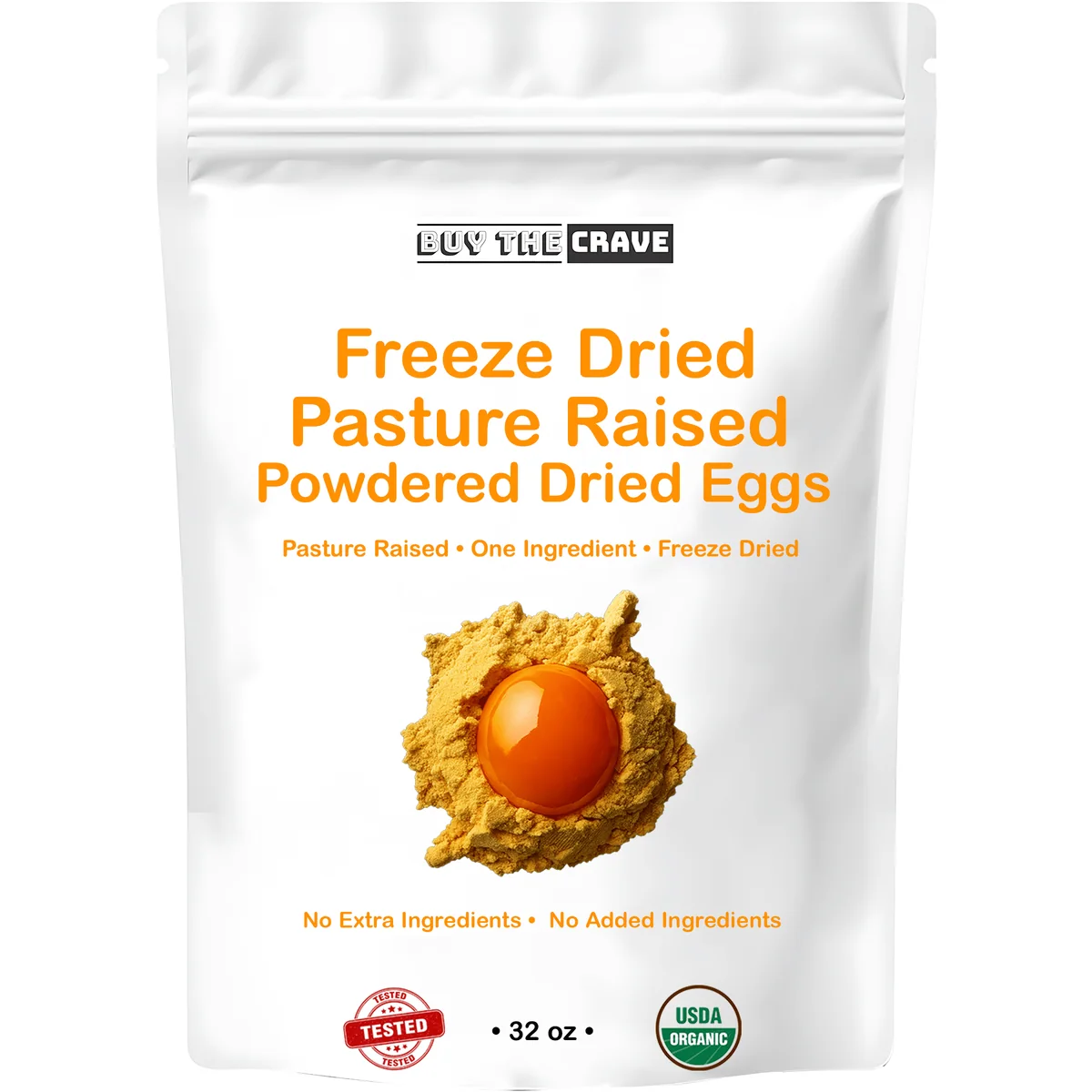
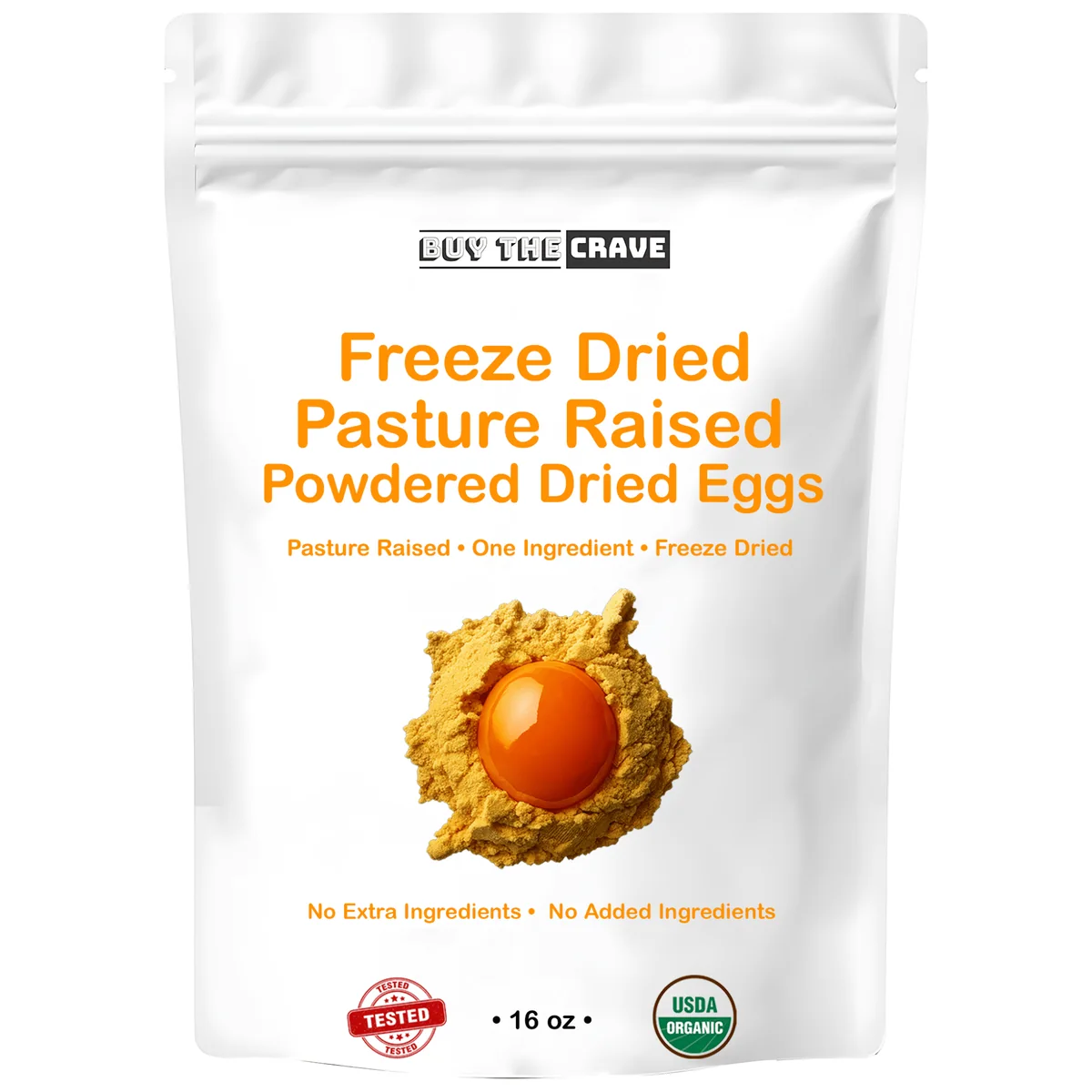
Here's the nutrition in one serving of our Freeze-Dried Whole Egg Powder: 2 tablespoons (13 g), which equals one egg.
| Per 2 tbsp (13 g) = 1 egg | Amount | % Daily Value |
|---|---|---|
| Calories | 80 | |
| Protein | 6 g | |
| Total fat | 6 g | 8% |
| Saturated fat | 2 g | 10% |
| Trans fat | 0 g | |
| Cholesterol | 230 mg | 77% |
| Sodium | 65 mg | 3% |
| Total carbohydrate | 0.5 g | <1% |
| Sugars | 0 g | |
| Vitamin D | 1.1 mcg | 6% |
| Calcium | 28 mg | 2% |
| Iron | 0.8 mg | 4% |
| Potassium | 70 mg | 2% |
That's 6 g of complete protein (with all 9 essential amino acids), almost no carbs and no added sugar in each egg. Eggs are also naturally high in cholesterol, so if your doctor has asked you to limit it, count powdered eggs the same way you would fresh ones.
Powdered eggs vs fresh eggs
- Nutrition: very close when the powder is pure egg.
- Shelf life: fresh eggs last a few weeks in the fridge. Sealed freeze-dried egg powder can last up to 25 years with no refrigeration.
- Convenience: no cracking, no shells, and nothing to spoil. Use only what you need.
- Taste and texture: good freeze-dried powder scrambles soft and tastes close to fresh. Heat-dried powders can taste more "cooked."
Things to know before you buy
How it's dried matters. Most cheap egg powder is spray-dried with hot air. High heat can partly cook the eggs, dull the flavor, and break down some heat-sensitive vitamins. Freeze-drying removes water at low temperature, so the eggs stay closer to fresh. See our freeze-dried vs dehydrated eggs guide for the full comparison.
Oxidized cholesterol. When eggs are dried with heat and stored exposed to air, some of their cholesterol can oxidize. Gentle drying and airtight, sealed packaging help keep this low. That's another reason to choose freeze-dried powder and keep the bag tightly closed.
Check the ingredients. Some egg powders add anti-caking agents, salt, or milk powder and oil to make "scrambled egg mix." Pure egg powder should list one ingredient: eggs.
Egg allergies. Powdered eggs are still eggs. Anyone with an egg allergy should avoid them.
Food safety. Commercial egg powder is made under food safety controls, which is safer than drying raw eggs at home. Always cook rehydrated eggs thoroughly, just like fresh eggs.
How to choose healthy powdered eggs
Look for these five things on the label:
- One ingredient: eggs only, with no fillers, oils or anti-caking agents.
- Freeze-dried, not spray-dried: better flavor and texture, and gentler on nutrients.
- Quality of the eggs: Grade A eggs, ideally from pasture-raised hens.
- Sealed, resealable packaging: keeps out air and moisture.
- Clear mixing directions and servings per bag: so you know exactly what you're getting.
5 things to look for on the label
- One ingredient: eggs only
- Freeze-dried, not spray-dried
- Grade A, pasture-raised eggs
- Sealed, resealable bag
- Clear mixing directions and servings
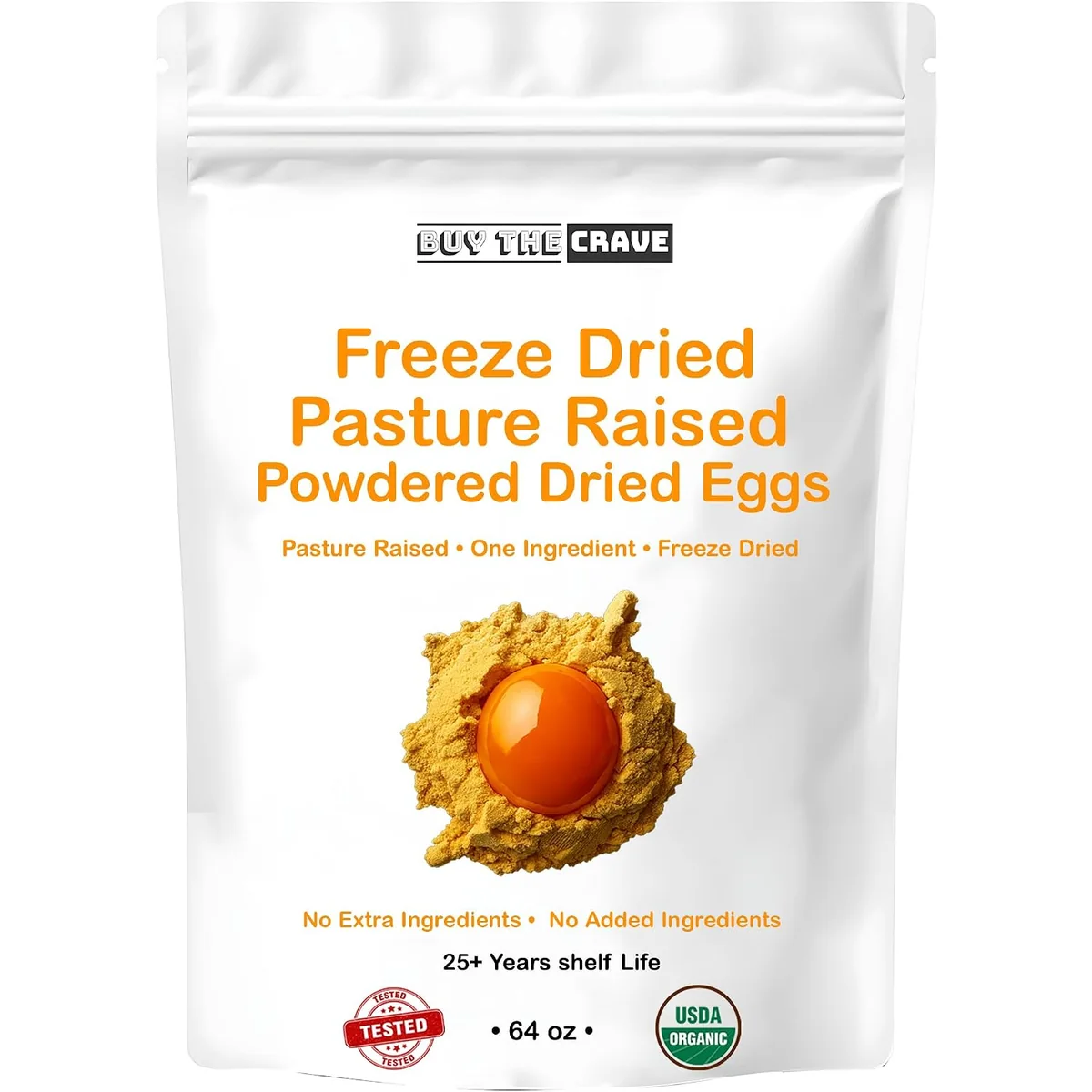
Our Freeze-Dried Whole Egg Powder checks every box. It's made from one ingredient, Grade A eggs from pasture-raised hens, and it's freeze-dried and sealed for a shelf life of up to 25 years.
Healthy ways to use powdered eggs
- High-protein breakfast: scramble 1/4 cup powder + 1/4 cup water for 2 eggs, and add spinach, peppers or tomatoes.
- Protein boost for baking: use the powder in pancakes, muffins and protein bars in place of fresh eggs.
- Low-carb and keto meals: eggs have almost no carbs, so they fit easily into keto and low-carb cooking.
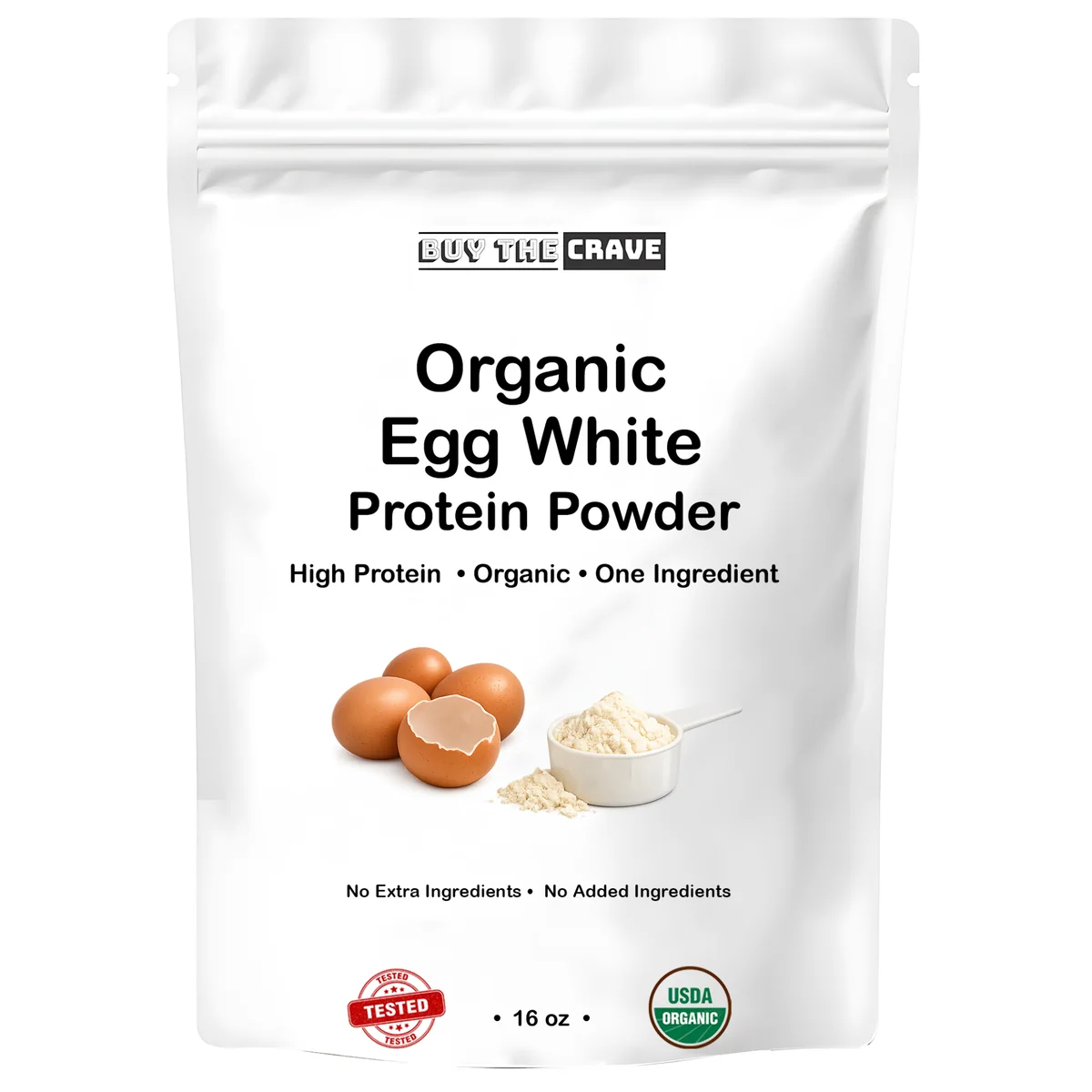
- Extra egg white protein: for a leaner protein boost, add Organic Egg White Protein Powder to shakes or oatmeal. One 3 tbsp serving has 15 g of protein.
- Camping and travel: real, protein-rich eggs without a cooler.
2 eggs
4 eggs
6 eggs
More recipes and tips are in our guide to using powdered eggs.
Frequently asked questions
Do powdered eggs have protein?
Yes. Our freeze-dried whole egg powder has 6 g of protein per egg (2 tbsp), and it's a complete protein with all 9 essential amino acids.
Are powdered eggs real eggs?
Yes. Pure whole egg powder is real eggs with the water removed. Check that the ingredient list says only "eggs."
Are powdered eggs processed?
They're minimally processed. The eggs are dried and milled, but nothing needs to be added. Freeze-dried powder is the gentlest option because it isn't dried with high heat.
Are powdered eggs safe to eat?
Yes, when made commercially and cooked thoroughly after mixing with water. Store the bag sealed in a cool, dry place.
Always cook rehydrated eggs thoroughly before eating.